


2020-10-22
A Report on the IATF 16949 Standard Training at Zhejiang Oswell Electric Technology Co., Ltd.
In accordance with the company’s 2019 Quality Development Plan, which aims to comprehensively enhance both product and process quality, the company organised a two-day training session on the ‘IATF 16949:2016’ standard on 23–24 September 2019, followed by a three-day training session on the ‘Five Manuals’ from 11–13 October 2019.
We were honoured to have Mr Chen Fan and Ms Suo Yucai from our partner consultancy firm deliver the training sessions on the standard and the Five Manuals respectively.
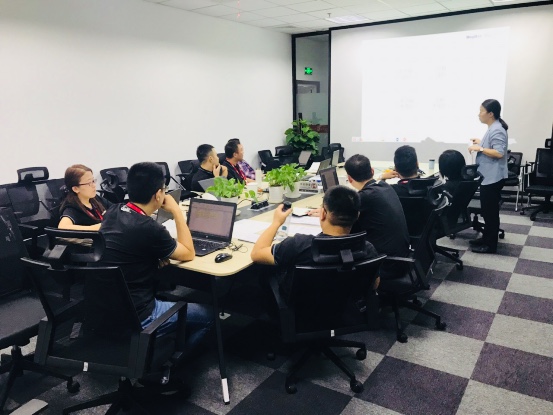
As a senior IATF 16949:2016 system auditor, Mr Chen Fan possesses extensive auditing experience and specialist theoretical knowledge. Combined with his distinctive teaching style, he ensured we gained a great deal from this training. The IATF 16949:2016 standard applies to sites of organisations manufacturing production parts, service parts and/or accessories specified by customers. The core of this standard is the development and interpretation of quality management system requirements specifically for the automotive industry, based on ISO 9000. The standard’s main content comprises the requirements of the process approach and practical application methods, and is primarily divided into the following eight sections:
1. Organisational context: Understanding the organisation and its context; understanding the needs and expectations of interested parties; determining the scope of the quality management system (including specific customer requirements); and the quality management system and its processes;
2. Leadership: Leadership and commitment; policy;
3. Planning: Measures to address risks and opportunities; planning for quality objectives and their achievement; planning for change;
4. Support: Resources; competence (with an emphasis on the competence of internal auditors and second-party auditors); awareness; communication; documented information
5. Operation: Planning and control of operations; requirements for products and services (manufacturability review); design and development of products and services; Operation (continued): Control of externally provided processes, products and services (monitoring, auditing and improvement of suppliers); production and service provision; release of products and services; control of non-conforming output;
6. Performance Evaluation: Monitoring, measurement, analysis and evaluation; internal audits; management review
7. Improvement: General provisions, non-conformities and corrective actions, Q&A and knowledge-sharing on continuous improvement
8. Application of the Process Approach:
1) What are customer-specific requirements?
2) How to identify and fulfil customer-specific requirements
3) Practical exercise on the application of the ‘turtle diagram’
4) Using process maps to determine the audit approach, identify the basic, management and support activities of a process, and thereby guide the methods and steps of the audit process;
5) Practical case study exercise on the application of process maps;
6) PDCA and risk-based thinking training
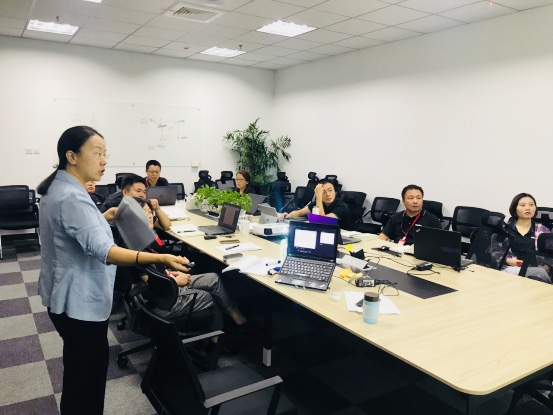
Throughout the training, Mr Chen incorporated numerous real-world case studies to facilitate participants’ understanding of the standard clauses. He also organised group discussions on relevant topics and, at his own expense, awarded prizes to outstanding participants, which not only stimulated their thinking but also achieved the learning objectives.
To minimise disruption to day-to-day operations, our training on the five manuals was scheduled for 11–13 October 2019, including a Sunday. Participants overcame the fatigue of having worked six consecutive days following the National Day holiday and attended the training on Sunday with high spirits.
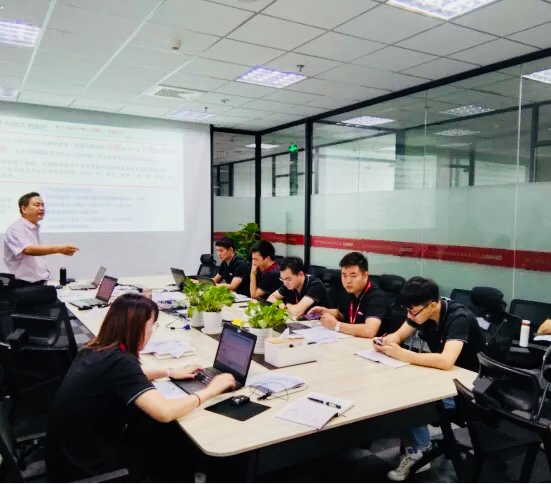
Mr Su, a senior training instructor with over 20 years’ experience, drew upon our company’s specific circumstances and his extensive experience in corporate project consultancy to deliver the training in a clear, accessible and targeted manner, ensuring that participants gained significant benefits.
Following five days of systematic study, each participant gained a preliminary understanding of the IATF 16949:2016 standard and the Five Manuals, as well as a solid grasp of the clauses contained therein and their practical application. The company has also required staff from all departments to conduct follow-up training for their own teams upon completion of the course, with the aim of transforming our company into a learning organisation. This initiative is designed to effectively improve both product quality and process quality.